

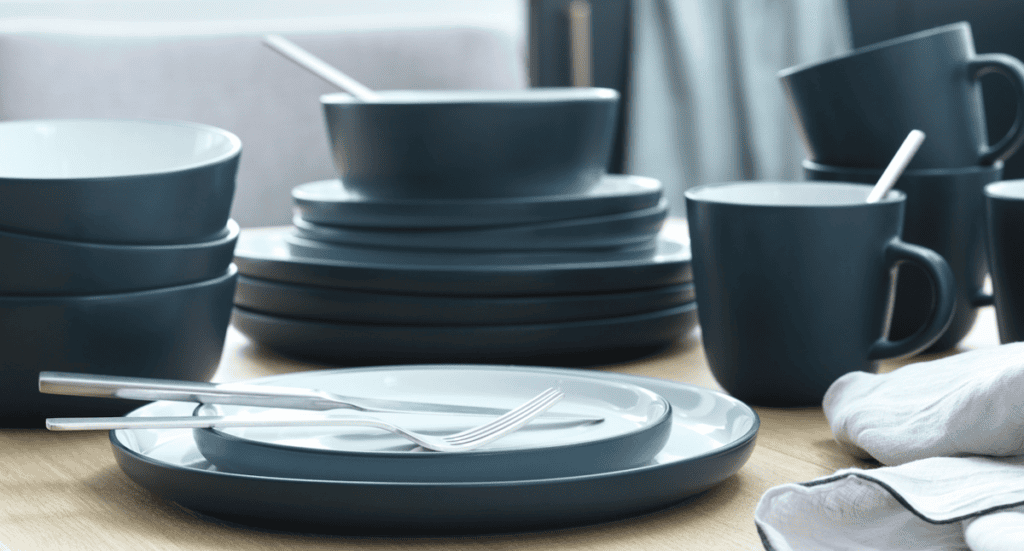
Buying and Caring for Ceramic Tableware
A complete guide to choosing and caring for porcelain, stoneware and bone china
Choosing the Right Dinnerware
Everyday plates, weekend bowls and special‑occasion pieces all behave differently depending on the material they’re made from. Porcelain, stoneware and bone china each bring their own strengths — from durability and heat‑retention to elegance, weight and finish. Understanding these differences helps you choose dinnerware that not only looks right on the table, but also suits the way you cook, serve and care for your dishes.
Whether you prefer the refined smoothness of porcelain, the rustic warmth of stoneware or the light, luxurious feel of bone china, this guide explains the differences between porcelain, stoneware and bone china, helping you choose the right ceramic tableware for your home.
Ceramic Tableware – Material Types
Porcelain
Porcelain is the classic choice for everyday and special‑occasion dinnerware. Made from refined clay fired at very high temperatures, it has a smooth, glass‑like surface that feels elegant yet reassuringly durable. Its non‑porous finish means it resists stains, cleans easily and maintains its colour over time, even with daily use.
Despite its refined appearance, porcelain is tougher than many people expect. It handles heat well, making it suitable for microwaves and dishwashers, and its relatively lightweight feel makes it comfortable to use day‑to‑day. The finish can range from bright white to soft ivory, with both glossy and matte options depending on the style you prefer.
Porcelain at a glance:
- Look & feel: Smooth, refined, modern or classic
- Durability: Strong and chip‑resistant for everyday use
- Weight: Light to medium
- Care: Dishwasher and microwave safe (unless decorated with metallic trims)
- Best for: Everyday meals, entertaining, clean modern table settings
Porcelain is a great all‑rounder — stylish enough for guests, practical enough for daily life, and versatile enough to suit almost any kitchen style.
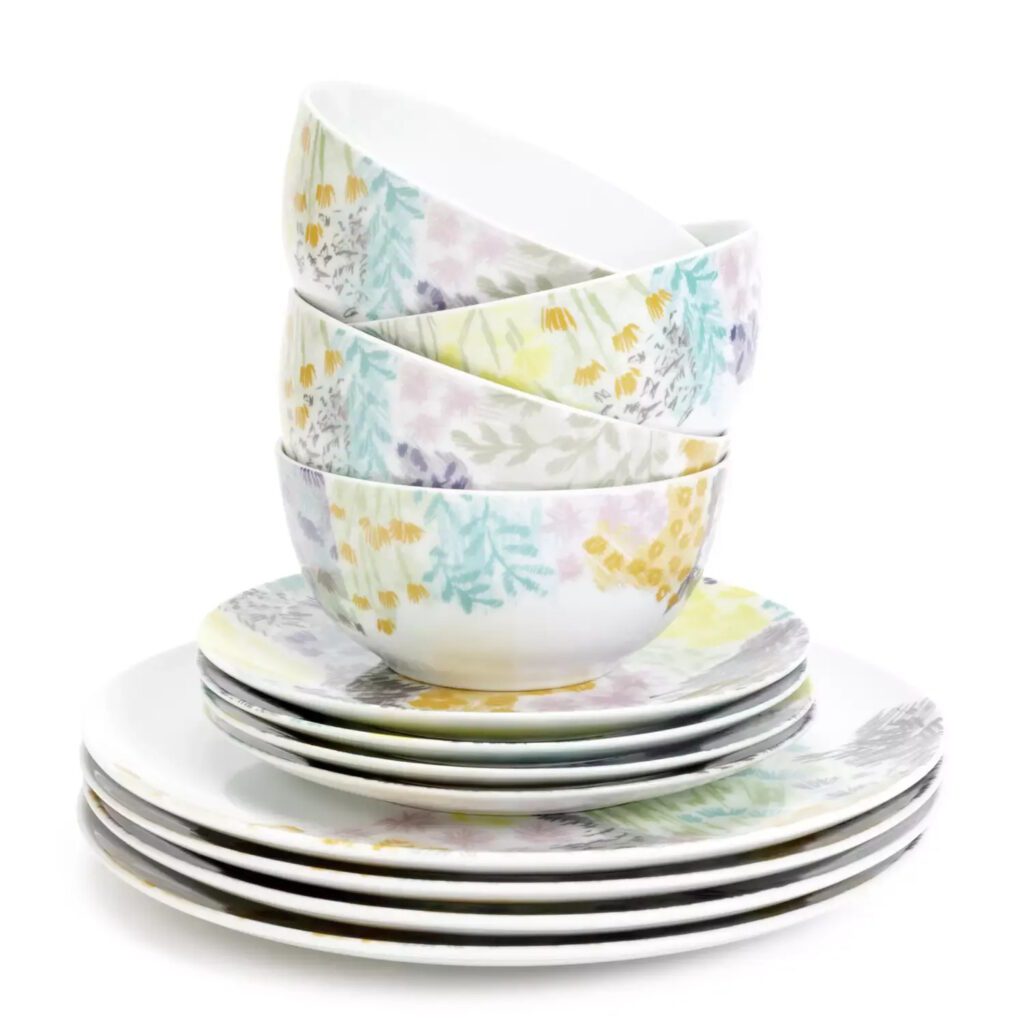
Porcelain plates and bowls with floral pattern
Stoneware
Stoneware brings a warm, relaxed character to the table. Made from dense clay fired at slightly lower temperatures than porcelain, it has a naturally thicker, more robust feel that makes it ideal for everyday meals. Its surface often carries subtle texture or variation, giving each piece a handcrafted, artisanal quality that suits both rustic and modern kitchens.
The beauty of stoneware lies in its versatility. It retains heat well — great for keeping food warm — and its weight gives it a reassuring, sturdy presence. Many stoneware glazes are reactive, meaning no two pieces look exactly the same, adding charm and individuality to your table settings. Most stoneware is dishwasher and microwave safe, though matte glazes can show cutlery marks over time (these usually buff out easily).
Stoneware at a glance:
- Look & feel: Warm, tactile, often with natural variation
- Durability: Very strong and ideal for everyday use
- Weight: Medium to heavy
- Care: Dishwasher and microwave safe; matte glazes may show light marks
- Best for: Casual dining, family meals, relaxed modern or rustic styles
Stoneware is the go‑to choice if you want dinnerware that feels cosy, characterful and built for daily life — practical, sturdy and quietly stylish.
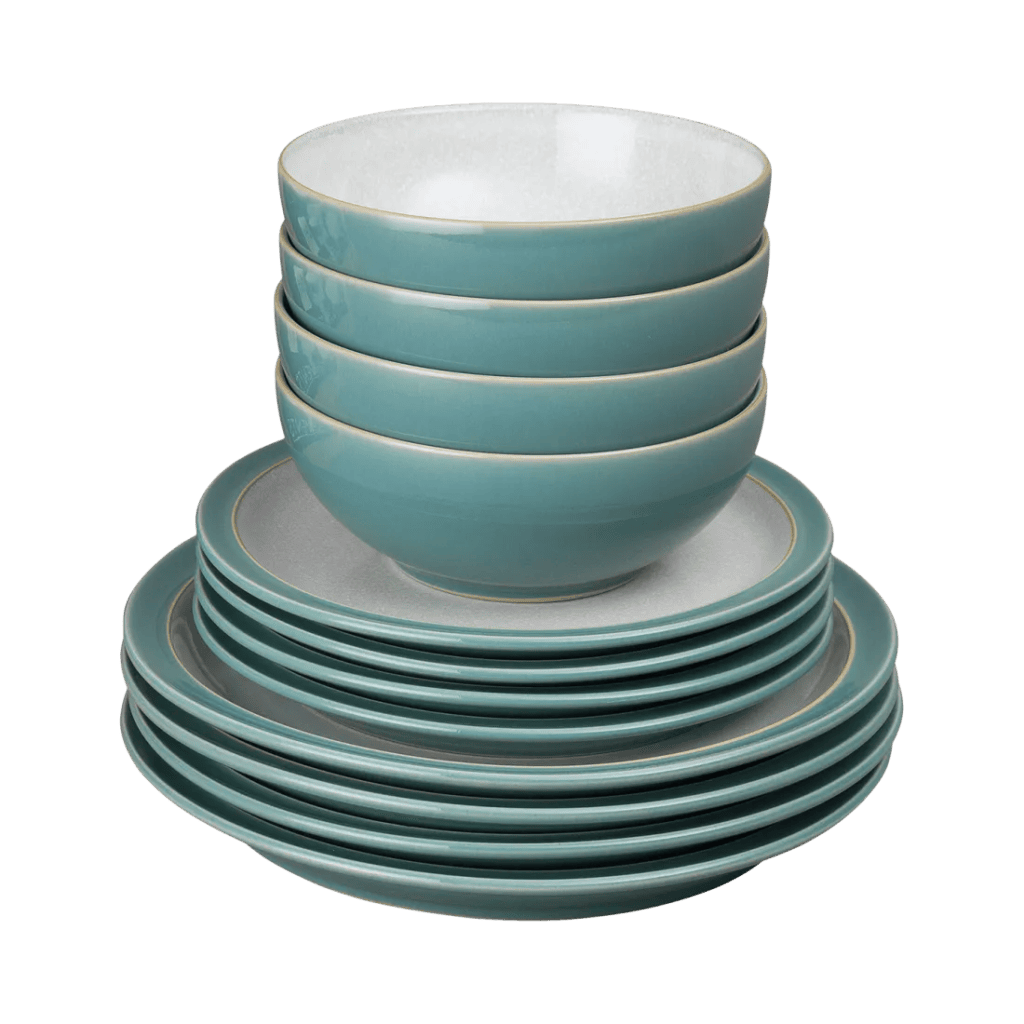
Stoneware plates and bowls with reactive glaze
Bone China
Bone china is the lightest and most refined of all ceramic dinnerware materials. Made from a blend of porcelain clay and bone ash, it is fired at high temperatures to create a delicate‑looking yet remarkably strong finish. Its signature qualities are translucency, smoothness and a feather‑light feel that makes it a favourite for formal dining and elegant table settings.
Despite its fine appearance, bone china is surprisingly durable. It resists chipping better than many heavier ceramics and maintains its bright, luminous colour over time. Most modern bone china is dishwasher and microwave safe, although pieces with metallic trims or intricate decoration should be washed by hand to preserve their detailing.
Bone china’s refined look makes it ideal for special occasions, but its strength and practicality mean it can be used every day if you prefer a lighter, more elegant feel at the table.
Bone China at a glance:
- Look & feel: Light, smooth, translucent, elegant
- Durability: Very strong and chip‑resistant despite its delicate appearance
- Weight: Lightest of all ceramic dinnerware
- Care: Usually dishwasher and microwave safe; hand‑wash decorated pieces
- Best for: Formal dining, elegant table settings, everyday use with a refined feel
Bone china is the perfect choice if you want dinnerware that feels luxurious in the hand yet stands up to daily life — timeless, graceful and quietly resilient. For more information on bone china production and how to choose and care for your bone china tableware – visit the Wedgewood Guide
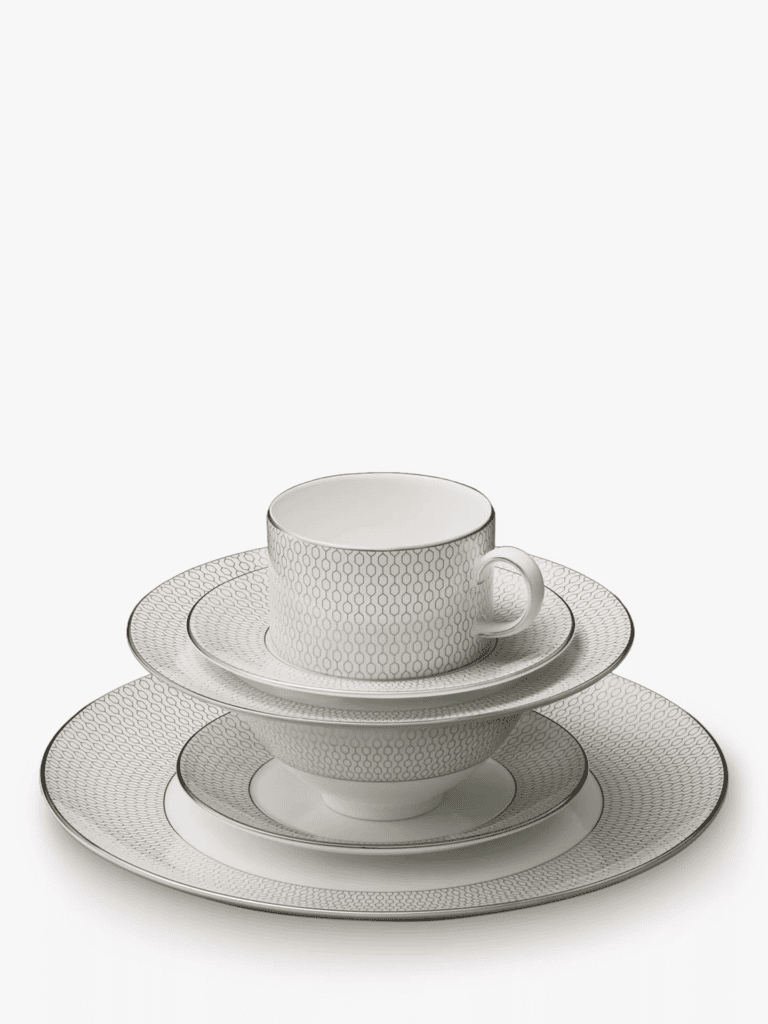
Wedgewood translucent bone china tableware
Ceramic Tableware – Material Comparison
| Material | Look & Feel | Durability | Weight | Care | Best For |
|---|---|---|---|---|---|
| Porcelain | Smooth, refined, modern or classic | Strong and chip‑resistant | Light to medium | Dishwasher & microwave safe (avoid metallic trims) | Everyday meals, entertaining, clean modern settings |
| Stoneware | Warm, tactile, natural variation | Very strong, ideal for daily use | Medium to heavy | Dishwasher & microwave safe; matte glazes may show marks | Casual dining, family meals, rustic or relaxed styles |
| Bone China | Light, smooth, translucent, elegant | Very strong despite delicate feel | Lightest of all | Usually dishwasher & microwave safe; hand‑wash decorated pieces | Formal dining, elegant settings, refined everyday use |
This comparison table helps you choose the ceramic tableware that best suits your home and lifestyle.
Care & Cleaning
Looking after your ceramic tableware properly helps it stay beautiful for years, whether you use it every day or save it for special occasions. Each material has its own strengths, but a few simple habits make all the difference in keeping porcelain, stoneware and bone china looking their best.
Most modern dinnerware is designed to be dishwasher and microwave safe, but always check the manufacturer’s guidance — especially if your pieces have metallic trims, hand‑painted decoration or reactive glazes. Using a gentle dishwasher cycle and spacing items so they don’t touch helps prevent accidental chipping. Hand‑washing is recommended for delicate or decorated pieces, using warm water, mild detergent and a soft cloth.
Cutlery marks can appear on matte or textured glazes, particularly on stoneware. These are usually surface‑level and can be removed with a gentle non‑abrasive cleaner. Avoid harsh scourers or strong chemicals, as they can dull the finish over time. For storage, stack plates with felt protectors or soft cloths between them if you want to minimise wear on fine bone china.
Care tips at a glance:
- Dishwasher use: Safe for most porcelain, stoneware and bone china
- Metallic trims: Hand‑wash only
- Cutlery marks: Buff gently with a non‑abrasive cleaner
- Microwave use: Avoid with metallic decoration
- Storage: Use felt protectors for fine or delicate pieces
With the right care, your ceramic tableware will stay bright, smooth and resilient — ready for everyday meals, family gatherings and special occasions alike.
Summary
Choosing the right dinnerware is about more than materials and finishes — it’s about finding pieces that feel good to use, suit the rhythm of your home and bring a little pleasure to everyday meals. Whether you’re drawn to the smooth refinement of porcelain, the cosy warmth of stoneware or the light elegance of bone china, each material has its own strengths and its own character.
Take your time exploring shapes, colours and textures, and think about how you cook, serve and gather around the table. The best dinnerware isn’t always the most expensive or the most delicate — it’s the set that fits naturally into your life and makes every meal, from weekday breakfasts to special occasions, feel just a little more enjoyable.
With the right care, your chosen pieces will stay beautiful for years, becoming part of the moments and memories you share at home. Dinnerware is something you live with every day — so choose what feels right, looks right and makes your table feel like yours.
Your Ceramic Tableware Questions Answered
🔷 Ceramic tableware is made to be enjoyed every day, and choosing the right pieces simply comes down to the look and feel you love. If you’d like help finding styles that suit your home, explore our curated collections for inspiration. Our guides and selections are designed to help you compare materials quickly and find pieces that feel great to use — and last for years.
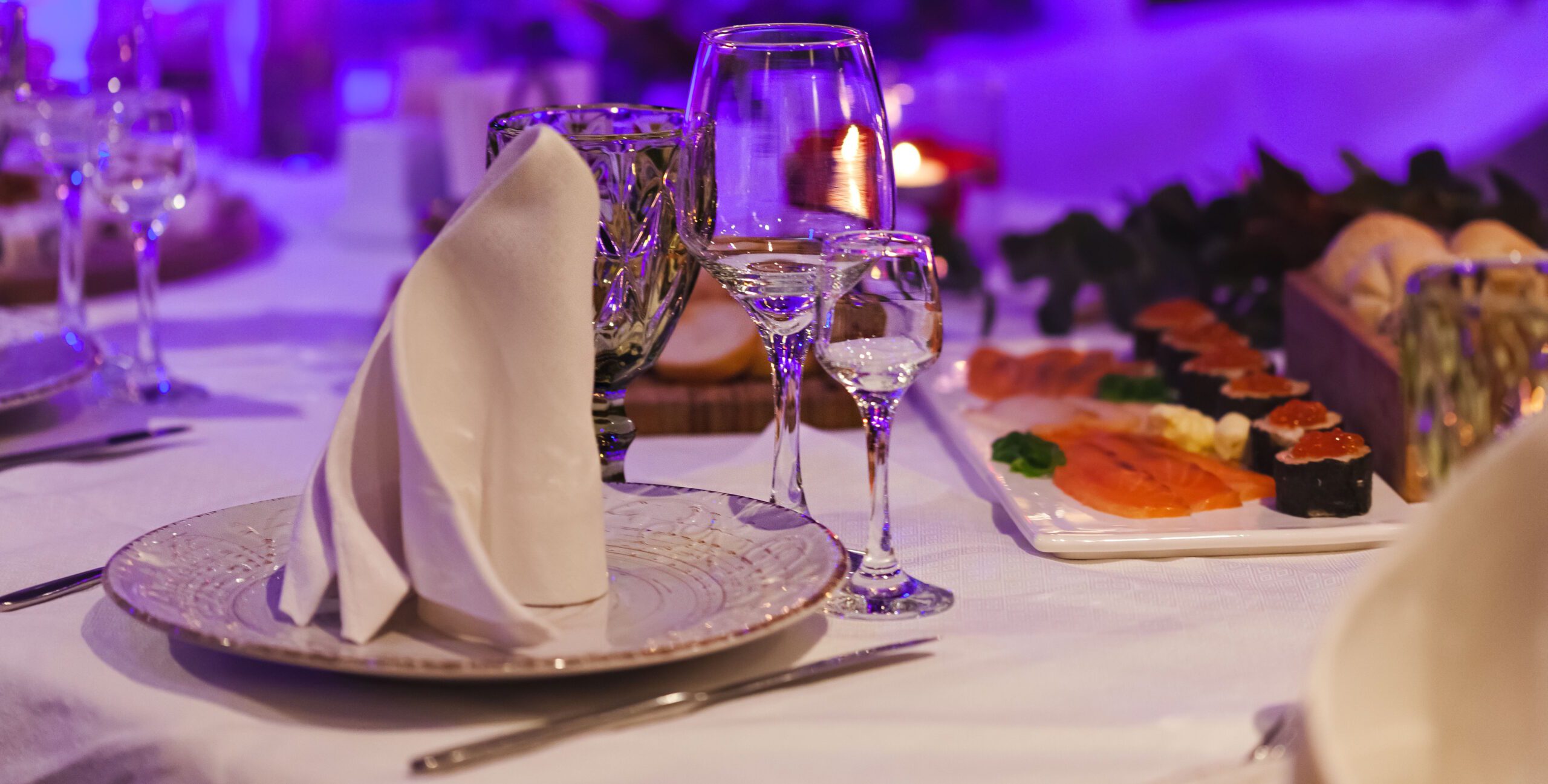
A beautifully set table begins long before the meal.